Garda Bersama Desa Strengthens Education and Local Potential in Girimukti
Villages play a central role in Indonesia’s national development. They are home to valuable natural resources, local knowledge, and human potential, making their development essential to building a more inclusive and sustainable future.
Girimukti Village, located in Cilograng District, Lebak Regency, Banten Province, has significant natural and human resources. However, much of this potential has yet to be fully developed due to limited infrastructure and the village’s distance from major urban centres.
Residents face several barriers to accessing education, healthcare, information, and technology. Damaged roads and the absence of internet access further restrict educational opportunities, access to services, and the exchange of information.
The village also faces interconnected social and economic challenges. These include school dropout, the absence of a community learning centre, low motivation to continue learning, and limited parental awareness of the importance of education.
At the same time, many residents have limited knowledge of how local agricultural resources can be developed into higher-value products. Environmental practices—including disposing of waste in rivers or behind homes—also affect public health, environmental quality, and relationships within the community.
In response, Yayasan Inspirasi Indonesia Membangun (YIIM), together with Insight Investments Management and Yayasan Antara Cipta Karsa, also known as Yayasan Naratas, implemented Garda Bersama Desa Batch 5.
The program was delivered through Yayasan Naratas’ youth initiative, Gerakan Muda Cendikia, from 20 July to 4 August 2025. It combined elements of YIIM’s Education, Community Empowerment, and Social and Religious Service pathways to respond to the village’s needs in an integrated manner.
The program reached schoolchildren at primary, junior-secondary, and senior-secondary levels, as well as young people, farmers, homemakers, local women’s groups, and other members of the Girimukti community.
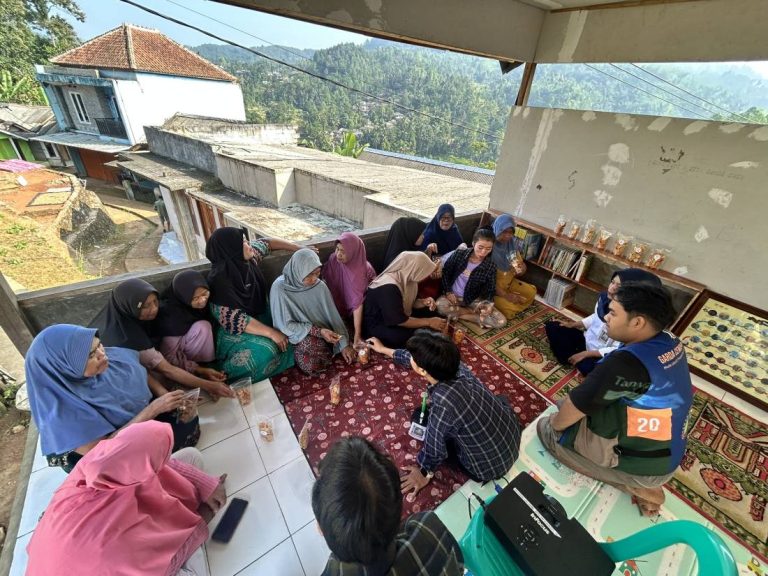
Education was a central component of the initiative. Learning-support sessions, literacy workshops, and activities to develop a community reading space were organized to strengthen learning motivation and expand access to educational resources.
These activities sought to create opportunities for children and other community members to continue learning outside formal classrooms. They also provided an initial foundation for developing a stronger culture of literacy within the village.
The community-empowerment component introduced participants to village entrepreneurship and the processing of local products. These sessions encouraged residents to identify the economic potential of resources already available in their surroundings and explore how those resources could be developed into marketable products.
Farmers participated in sessions on sustainable agriculture, accessible modern farming techniques, and food-crop diversification. The activities were designed to promote more innovative agricultural practices, improve productivity, and support the long-term welfare of farming households.
The program also included education on Clean and Healthy Living Practices. This activity encouraged residents to understand the relationship between personal hygiene, sanitation, environmental conditions, and community health.
Approximately 300 people benefited directly from the program, while an estimated 3,000 community members received indirect benefits. The broad reach reflected the program’s community-based approach, in which knowledge and practices introduced to direct participants could be shared with families and neighbours.
Garda Bersama Desa Batch 5 was delivered as part of Insight Investments Management’s Corporate Social Responsibility commitment. Through cross-sector collaboration, the initiative brought together social investment, nonprofit program management, local implementation capacity, and active community participation.
The program contributes to SDG 1 on No Poverty by strengthening skills and local economic opportunities; SDG 4 on Quality Education by supporting inclusive learning and community literacy; and SDG 8 on Decent Work and Economic Growth by promoting entrepreneurship, productive agriculture, and locally driven livelihoods.
Through this initiative, YIIM and its partners sought to strengthen education, improve community capacity, increase awareness of local economic potential, encourage sustainable agricultural practices, and promote healthier ways of living.
YIIM remains open to collaboration with organizations that share its commitment to expanding opportunity and ensuring that more communities can participate actively in Indonesia’s sustainable development.
Salam Inspirasi!